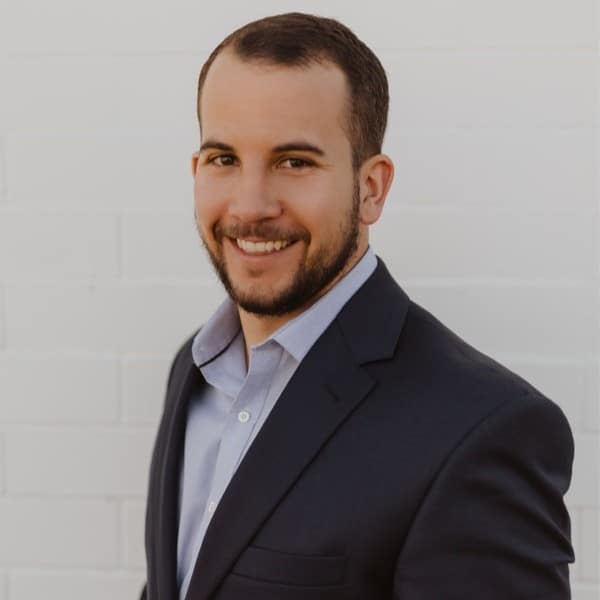


By: Ronnie Ragusa, Executive Search Leader
What Three Searches Taught Me About Leadership From the Search Table
Over the last few months, my team ran three retained searches that, on paper, had little to do with one another. One was a top-of-house succession at a specialty manufacturer whose long-tenured leader was retiring. Another was a president role on a CEO succession track at a diversified mechanical and building services enterprise. The third was a senior operating leader to run a fast-scaling facilities account for a demanding industrial client.
Three different industries, three different revenue scales, three different reasons the seats came open. And yet, when I sat across from the owner, CEO, or board in each one, I asked the same question. What does the next leader actually have to be? In every case, they converged on nearly the same answer.
They didn’t want a visionary. They wanted an operator.
Not “operator” as a personality type, but as a specific, provable thing: someone with real field credibility, who has carried a P&L with their own name on it, who can walk the plant floor or job site and be believed by the people already standing there. In one conversation, it was put more plainly than I could have. Field credibility matters more than executive sophistication. In another, the client kept returning to the phrase “operator style leadership” and described the job as running a whole business inside the business. The polish, the pedigree, and the recognizable logo on the résumé mattered far less than whether the person could actually run the thing and earn the room.
Here’s what stood out. Each of these companies had spent years leaning on a legacy strength. An established customer base, a loyal workforce that had been there from the start, or a way of doing things that had always worked. And each had quietly reached the limit of it. One had grown dependent on a handful of accounts and stopped hunting new business. One had never successfully brought in outside talent who had run something larger. One was, in its own words, always a renewal away from risk.
None of them needed someone to invent a new vision. They needed someone who could move the organization off a comfortable plateau without breaking the trust of the people who built it. Every owner worried aloud about the same two people: the thirty-year veteran who says “we’ve always done it this way,” and the idealistic younger employee who desperately wants to see the place win. The real mandate wasn’t strategy. It was change, carried by someone the organization would actually follow.

That reframed how we ran all three searches, and it showed up most clearly in what separated the finalists from everyone else. In each search, the deciding filter was not operational skill. Plenty of capable operators could run the plant or the site. The ones who made the shortlist were the operators who could also own the growth: carry the commercial mandate, build the backlog, develop the bench, and take the business somewhere it hadn’t been.
That combination is rarer than it sounds. In one of the three, a genuinely strong plant leader was passed over for exactly this reason. He could run the operation, but the commercial and financial ownership the seat required wasn’t in his background, and this appointment needed it on arrival, not as a development project. The market is full of people who can hold a business steady. The premium sits with the ones who can hold it steady and push it forward.
One more thing proved true across all three, and it surprised me in how consistent it was: the strongest operators weren’t primarily motivated by base salary. The best candidates wanted upside tied to what they build. Participation, earned equity, a performance-linked stake, all of it mattered more to them than a bigger guaranteed number. They weren’t running from their current roles. They were running toward a seat where the reward matched the outcome they’d be accountable for.
When you find an operator negotiating for a structure that ties their compensation to the company’s results rather than simply asking for a higher floor, pay attention. That instinct can tell you something about how they’ll lead that a résumé rarely can.
None of this is an accident of timing. A generation of founder-owners across the mid-market is reaching succession all at once. Private equity is professionalizing industries that used to run on relationships and instinct. And skilled labor is tight enough that a leader without field credibility simply won’t be followed. The operator premium is what that convergence looks like from the search table.
So here’s the takeaway for anyone leading a company built on making, building, or servicing something real. The most polished name on the list is rarely the one who can do this. The operators who made these shortlists could have stayed where they were for a bigger guaranteed number. They didn’t. They wanted a seat where the reward was tied to what they built, and they were willing to earn the floor before asking anyone on it to change. That is the profile the market is quietly reorganizing around.
Request a Confidential Consultation